

October 1, 2026
International Day of Older Persons: Ageing with Dignity, Supporting Mental Health, and Preventing Homelessness
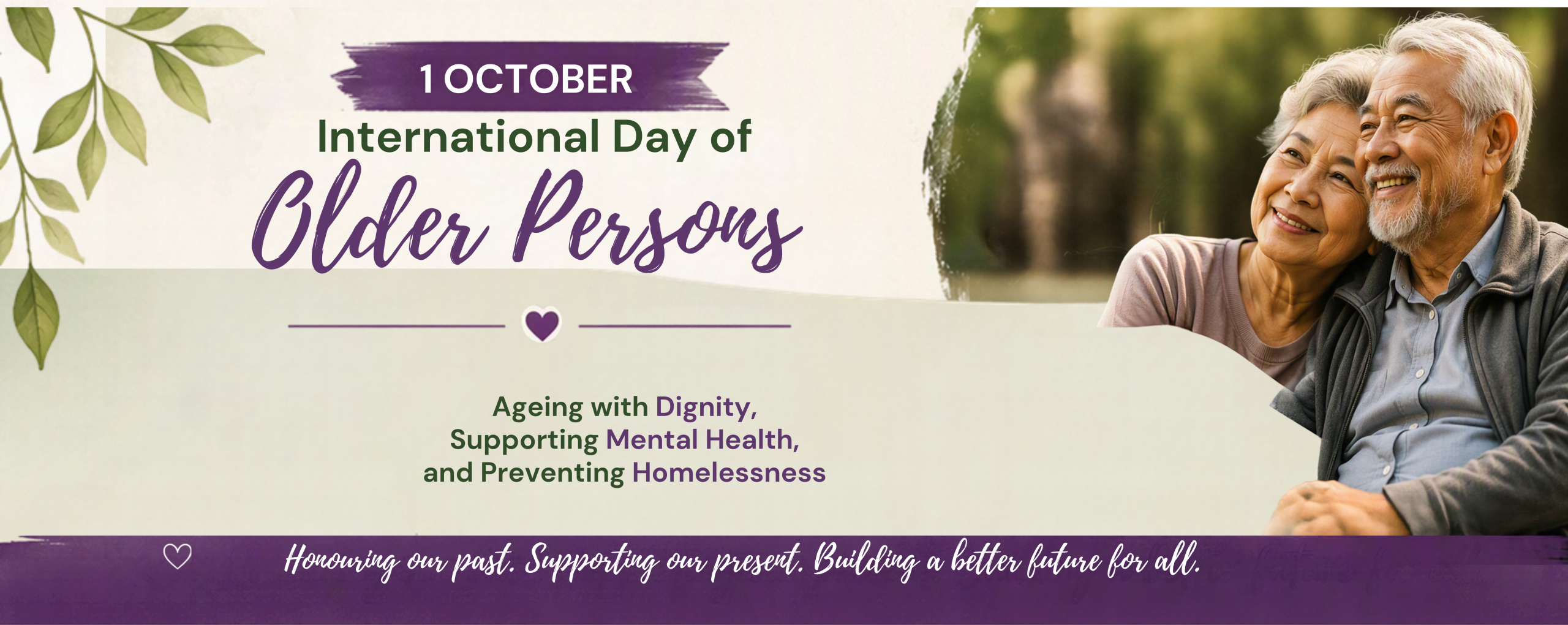
Every year on 1 October, the world comes together to recognise the International Day of Older Persons, a day dedicated to celebrating the contributions of older people while raising awareness of the challenges many face as they age.
Growing older can bring many positive experiences, including wisdom, stronger family connections, and opportunities to give back to communities. However, for some individuals, later life can also present significant challenges, including poor mental health, loneliness, bereavement, financial difficulties, and even homelessness.
As we mark International Day of Older Persons, it is important to recognise the links between ageing, mental health, and housing insecurity, and to consider how we can support older adults to live with dignity, stability, and connection.
The Mental Health Challenges Facing Older People
Mental health affects people of all ages, yet it is often overlooked in later life. Many older adults experience significant life changes, including retirement, declining physical health, reduced independence, or the loss of loved ones.
Bereavement is one of the most common challenges faced by older people. The loss of a partner, close friend, sibling, or family member can have a profound impact on emotional wellbeing. While grief is a natural response to loss, prolonged loneliness and isolation can increase the risk of anxiety, depression, and declining mental health.
Many older adults may also be reluctant to seek help, believing they should simply “get on with it” or that mental health support is only for younger generations. This can leave individuals struggling alone when support could make a significant difference.
Loneliness and Social Isolation
Loneliness is not simply about being alone. It is the feeling of lacking meaningful social connections, and it can affect anyone, regardless of age.
For older people, factors such as retirement, reduced mobility, health conditions, or losing a partner can make maintaining social connections more difficult. Over time, social isolation can impact both physical and mental wellbeing.
Community groups, social activities, volunteering opportunities, and support services play a vital role in helping older adults remain connected. A simple conversation, a regular visit, or participation in a community activity can have a powerful impact on someone’s wellbeing.
The Hidden Reality of Older Person Homelessness
When people think about homelessness, they do not often picture older adults. Yet an increasing number of older people face housing insecurity due to a variety of reasons.
Relationship breakdowns, rising living costs, debt, ill health, loss of income, and the death of a partner can all contribute to someone becoming homeless later in life. Some individuals may be forced to choose between heating and housing costs, while others may struggle to maintain tenancies due to physical or mental health challenges.
Experiencing homelessness at any age can be traumatic, but for older adults it often comes with additional risks. Existing health conditions may worsen, access to medical care can become more difficult, and feelings of fear, uncertainty, and isolation can increase.
The emotional impact of losing a home can also have a significant effect on mental health. A safe home provides more than shelter. It offers security, stability, and a sense of belonging.
The Importance of Compassionate Support
No one should face ageing, poor mental health, loneliness, or homelessness alone.
Providing compassionate and accessible support can make a life-changing difference. Mental health services, housing support, bereavement groups, social activities, and community outreach programmes all play an important role in helping older adults maintain their wellbeing and independence.
Sometimes support begins with something small:
- A listening ear.
- A friendly phone call.
- A visit from a neighbour.
- An invitation to join a local group.
- Access to practical advice and support services.
These simple acts can help people feel valued, connected, and supported during difficult times.
Creating Communities Where Everyone Belongs
The International Day of Older Persons reminds us that ageing should never mean being forgotten. Every older person has a story, a lifetime of experiences, and a valuable place within our communities.
By tackling loneliness, supporting mental health, and preventing homelessness, we can help ensure that older people live not only longer lives but better lives.
Older adults have helped shape the communities we live in today. They deserve access to appropriate mental health support, safe and secure housing, and opportunities to remain active members of society regardless of age or circumstance.
At NCNW, we believe that everyone deserves to feel safe, valued, and connected. This International Day of Older Persons, let us commit to building communities where older adults are supported, heard, and empowered to thrive.
Growing older should be a journey marked by dignity, compassion, and hope, not isolation, poor mental health, or homelessness. Together, we can make a difference.
If you need more information or support for homelessness or mental health, please fill out our online referral form or contact us here:
Email: mhsupport@ncnw.co.uk
Phone: 0151 345 6454

Stories of Impact, Straight to Your Inbox.
Join our newsletter for updates on our work, success stories from our community, and ways you can get involved.