
June 11, 2026
How to Start a Journal That You’ll Actually Keep
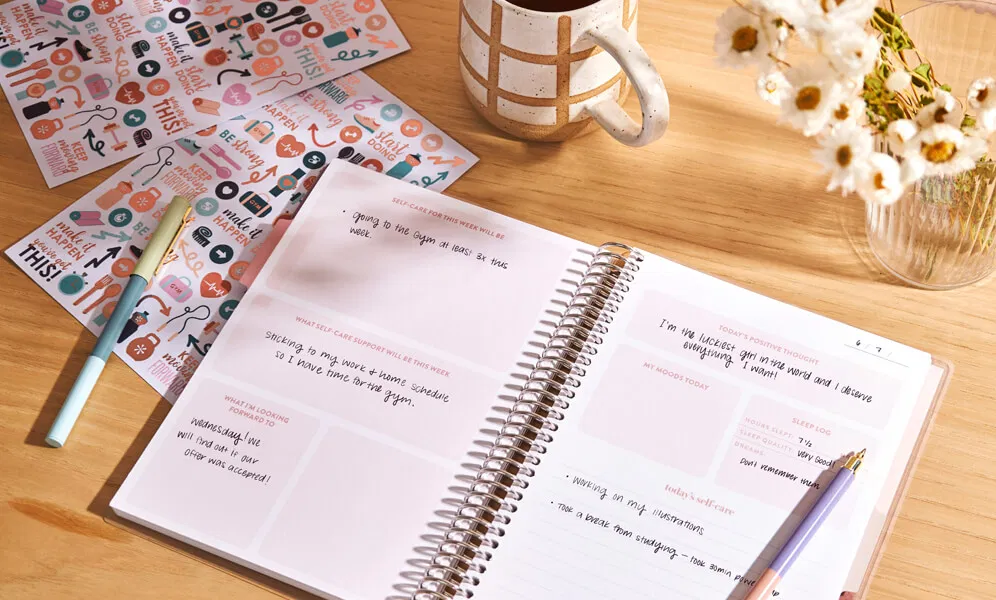
We’ve all bought that beautiful notebook, promised ourselves “this time I’ll stick with journaling,” and then… two pages later, it’s sitting untouched on a shelf. Don’t worry you’re definitely not alone!
Journaling doesn’t have to feel like homework. When done right, it becomes one of the most grounding and rewarding habits you can have. So, let’s talk about what journaling really is, why it’s so good for you, and how to start (and keep) a journal that truly sticks.
What Exactly Is Journaling?
At its core, journaling is simply writing down your thoughts, feelings, and experiences. It’s not about being a great writer, it’s about being honest with yourself.
You can use your journal to:
- Reflect on your day
- Set goals or intentions
- Work through emotions
- Track gratitude or habits
- Dream, brainstorm, or vent
There’s no right or wrong way to journal — it’s all about what feels natural for you.
Why We Do It (and Why It Matters)
We often start journaling because we want clarity, calm, or growth. Writing things out helps you slow down and process what’s going on in your head.
It’s kind of like having a conversation with your inner self, without interruptions, judgment, or pressure to have the right answer.
How to Start (and Actually Keep It Going)
Here’s the secret: the best journal is the one you’ll actually use. Try these gentle, realistic tips:
1. Keep It Simple
Start small even a few sentences a day counts. Try prompts like:
- “Today I feel…”
- “One thing that made me smile…”
- “Something I’m grateful for…”
2. Choose Your Time
Find a moment that feels easy to stick with maybe morning coffee or just before bed. Routine helps it become a habit.
3. Ditch Perfection
Your journal is not an essay. Scribble, doodle, cross things out it’s your space. No one else needs to see it.
4. Use Prompts When You’re Stuck
If you’re not sure what to write, use prompts like:
- “What’s been on my mind lately?”
- “What am I proud of this week?”
- “What’s something I need to let go of?”
5. Make It Feel Special
Light a candle, play soft music, or grab a cosy drink make journaling something you look forward to, not a chore.
How Journaling Impacts Mental Health
Writing regularly has powerful benefits:
- Reduces stress and anxiety by helping you release emotions.
- Improves self-awareness — you understand patterns and triggers better.
- Boosts mood — focusing on gratitude and progress can lift your spirits.
- Encourages mindfulness — it slows your mind and keeps you present.
Journaling gives your thoughts somewhere to go instead of staying bottled up inside.
The Positive Outcomes
Once you start journaling consistently, you’ll notice:
More clarity — decisions feel easier because you know what matters to you.
Better communication — you understand your emotions, so you can express them better.
Increased self-compassion — reading old entries reminds you how much you’ve grown.
A calmer, clearer mind — fewer racing thoughts and more focus.
Why Not Tell Us How You Journal?
- How do you usually start your journaling practice — do you use prompts, free writing, or just jot down whatever comes to mind?
- What’s your favourite time of day to journal, and why?
- Do you have any rituals or little habits that make journaling easier or more enjoyable?
- What’s one tip you’d give to someone who’s trying to start a journal for the first time?
- Do you use your journal for reflection, goal setting, gratitude, or something else entirely?
- Have you noticed any changes in your mood or mindset since you started journaling?
- How do you keep journaling consistently — do you set reminders, pair it with another habit, or just go with the flow?
- Do you prefer a digital journal or a physical notebook? Why?
- What’s the most surprising thing you’ve learned about yourself through journaling?
- Share your favourite journaling prompt — it might help someone else get started today!
If you feel you need some extra support with mental health or know anyone that might, please fill out our online referral form or contact us here:
Email: mhsupport@ncnw.co.uk
Phone: 0151 345 6454

Stories of Impact, Straight to Your Inbox.
Join our newsletter for updates on our work, success stories from our community, and ways you can get involved.